The Difference on the Surface: How the Nozzle Governs Quality
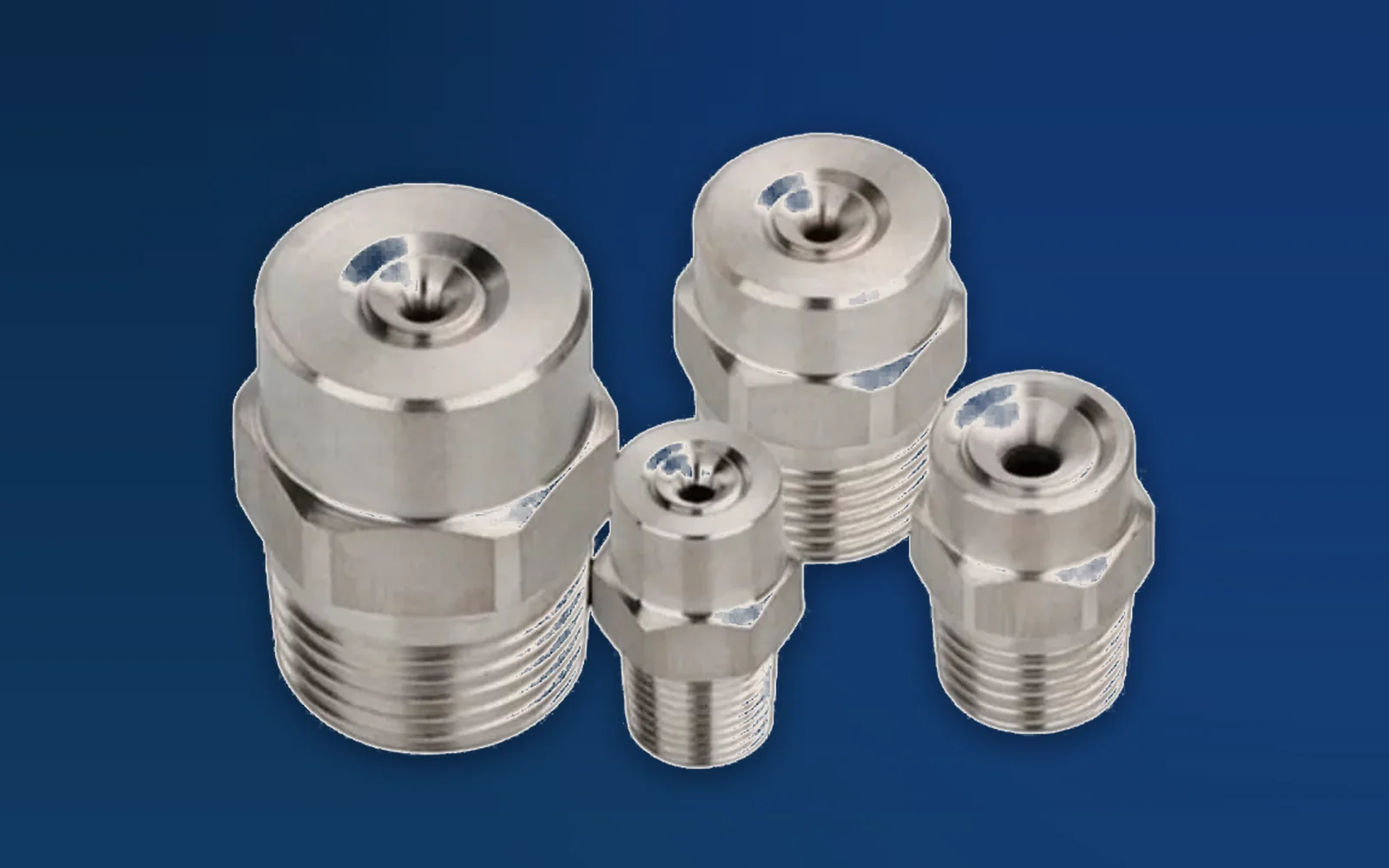
When you look at a surface treatment line, the pump, the tank and the conveyor catch your eye first. Yet the part that determines the quality of the finished product is often a nozzle that fits in the palm of your hand. Two lines running at the same pressure and the same flow rate can produce completely different surface qualities purely because of nozzle selection.
Why is the spray pattern so decisive?
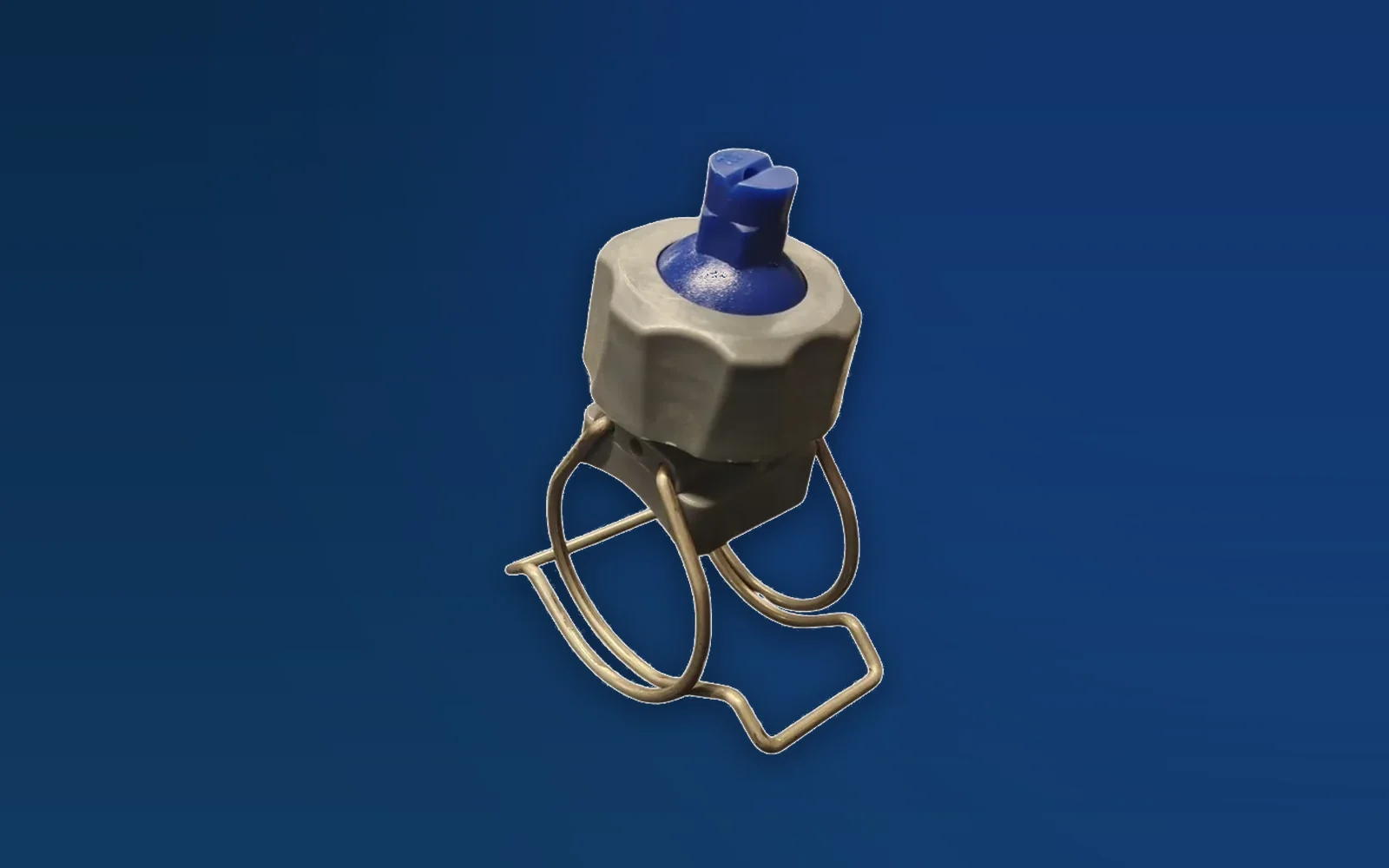
On flat jet nozzles, how sharply the jet is defined at its edges determines how evenly the overlap will run along the belt. Nozzles are arranged at set intervals on a manifold, and each nozzle's pattern overlaps its neighbour's by a certain proportion. If this overlap ratio is not calculated correctly, the surface develops stripes that are invisible to the naked eye but appear after coating.
A 110° nozzle, for example, produces a band roughly 715 mm wide at a distance of 250 mm. Move the same nozzle to 500 mm and the band widens, but the amount of liquid per unit area falls. In other words, changing the distance changes the coating thickness without changing the flow rate. That is why nozzle selection is never made on the "how many litres" question alone; angle, distance and spacing are calculated together.
Wear advances silently
The most insidious problem with a nozzle is wear. The orifice widens over time under the abrasive effect of the liquid passing through it. A widened orifice does two things: it increases the flow rate and narrows the spray angle. When both happen together, more liquid lands per unit area, the overlap is disturbed and the coating thickness varies along the line.
This change advances too slowly to notice by eye. The operator assumes nothing has changed, because the pressure gauge reads the same. Yet more liquid is flowing at that same pressure. The practical rule is this: a nozzle that exceeds its nominal flow rate by 10% should be replaced. Periodic flow measurement is the cheapest quality investment available; it takes five minutes with a bucket and a stopwatch.
Material selection determines service life
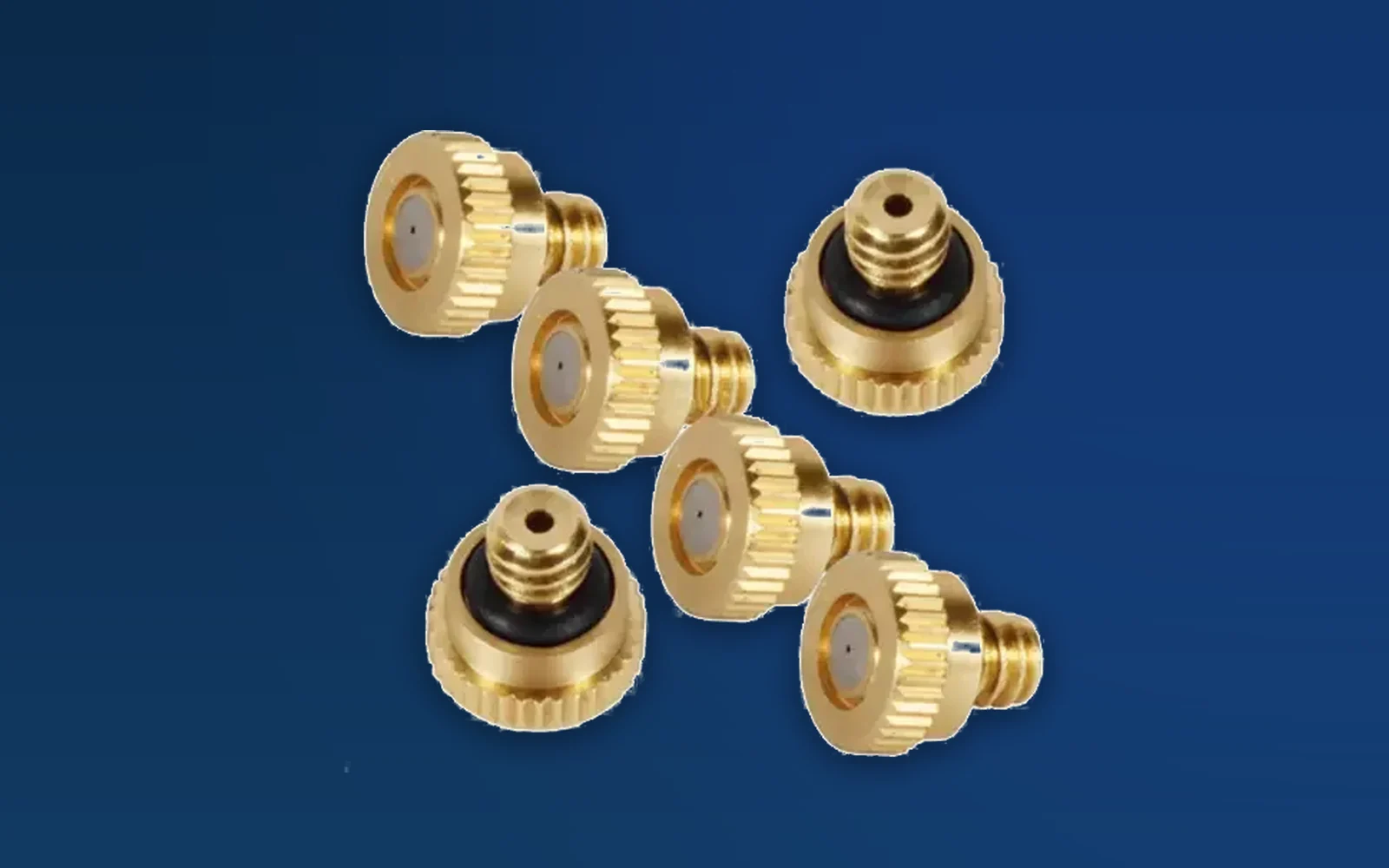
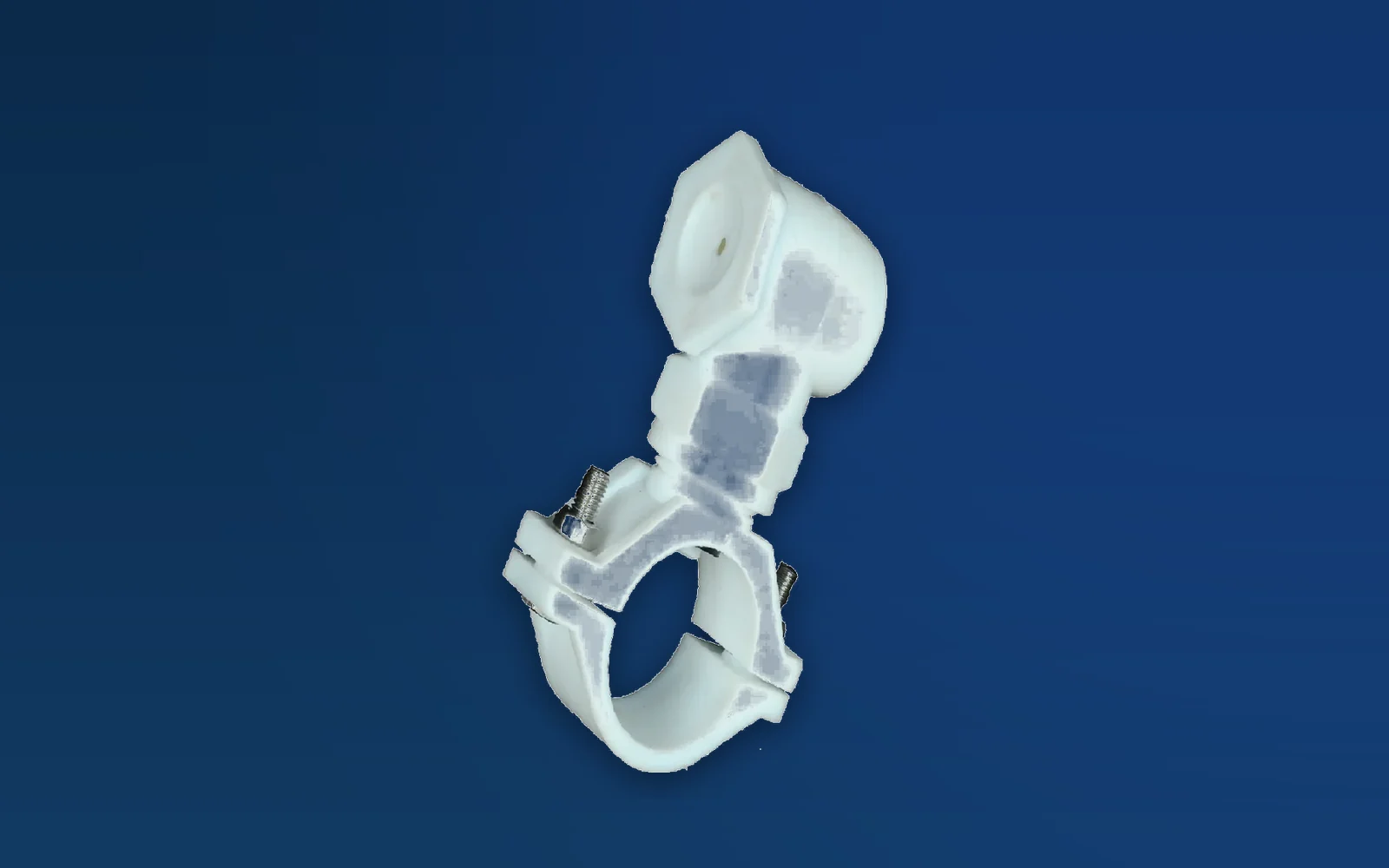
The second factor that governs the rate of wear is the body material. Stainless steel (SS304 / SS316) gives a long service life in most water-based applications. In baths containing acids and alkalis, a polypropylene (PP) body has the advantage against corrosion. In high-pressure fogging applications, nozzles with ceramic orifices are preferred; ceramic wears far more slowly than metal.
Clogging: it ends quality instantly
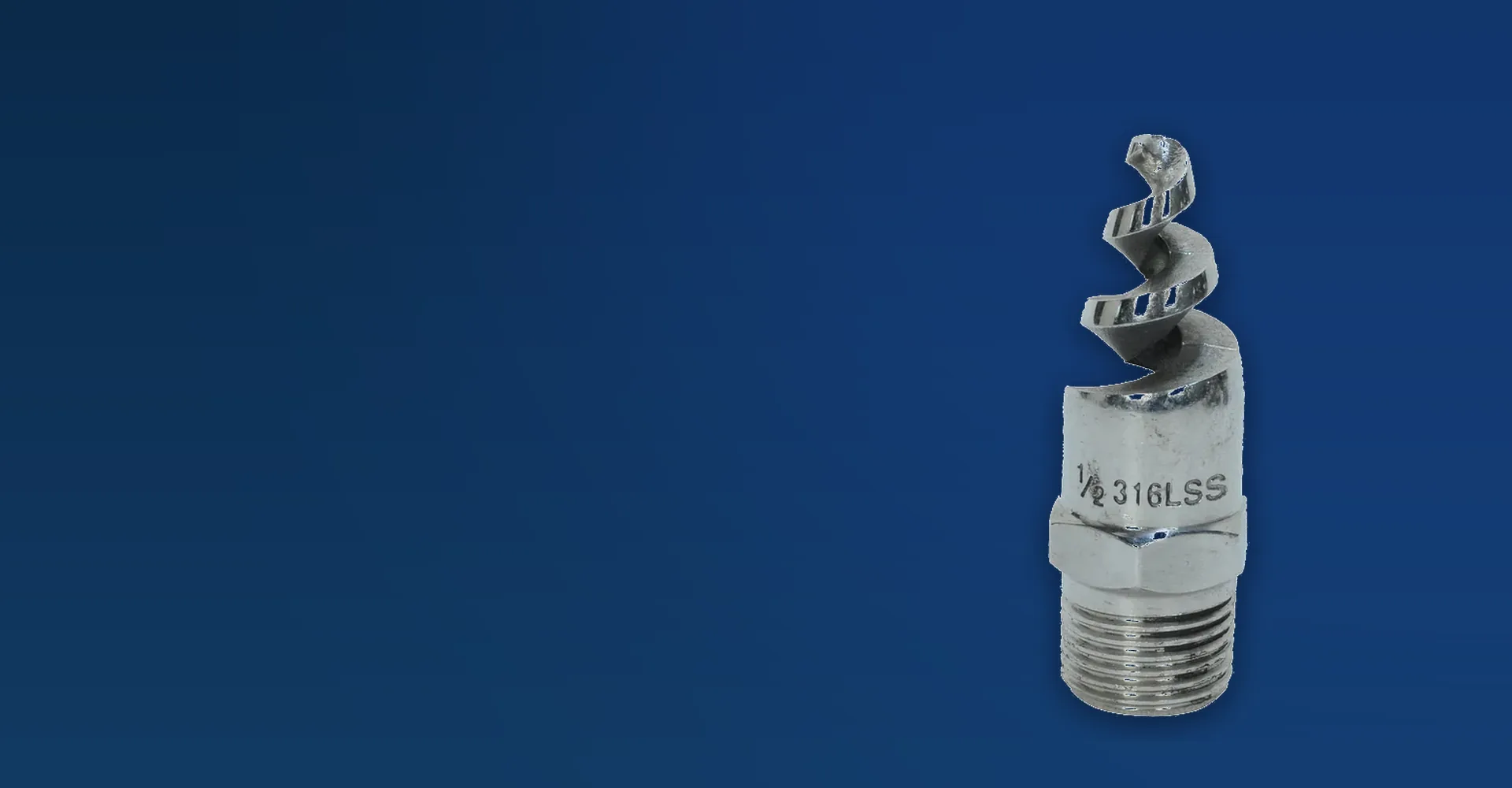
Where wear advances slowly, clogging acts at once. A single clogged nozzle leaves a gap in the coating along that section of the line. With fluids carrying particles, open cross-section spiral or full cone designs are far more resistant to clogging. A filter of a suitable mesh size fitted at the line inlet will also multiply nozzle life.
A short checklist
- Measure the nozzle flow rate every three months, and replace the nozzle if it is 10% above nominal.
- Record the spray distance and the manifold spacing, so you have a reference to return to when the line setting drifts.
- Do not leave nozzles dry when the line stops; chemicals that dry out form a crust in the orifice.
- Never use a wire brush or a needle to clean them; the orifice geometry is ruined.
- Choose the replacement nozzle from the same series and the same code; a "similar" nozzle will not give the same pattern.
What makes the difference on the surface is not expensive equipment, but a correctly selected and regularly checked nozzle. Tell us your line pressure, your target flow rate and your working distance, and we will determine the right series together.
Pressure or flow rate?
The two concepts most often confused in the field are pressure and flow rate. Pressure is the force the fluid exerts in the line; flow rate is the amount of liquid passing in a unit of time. In a nozzle the two are linked, but the relationship is not linear: quadruple the pressure and the flow rate only doubles. Raising the pressure to increase the flow rate is therefore an expensive route in energy terms. If you need more liquid, the right solution is to move to a nozzle with a larger orifice, or to increase the number of nozzles.
The same relationship works in reverse: when you try to reduce the flow rate by lowering the pressure, below a certain threshold the jet no longer opens fully. The nozzle then produces an irregular stream rather than a band. Every nozzle has a minimum working pressure, and below that value the spray pattern is not guaranteed.