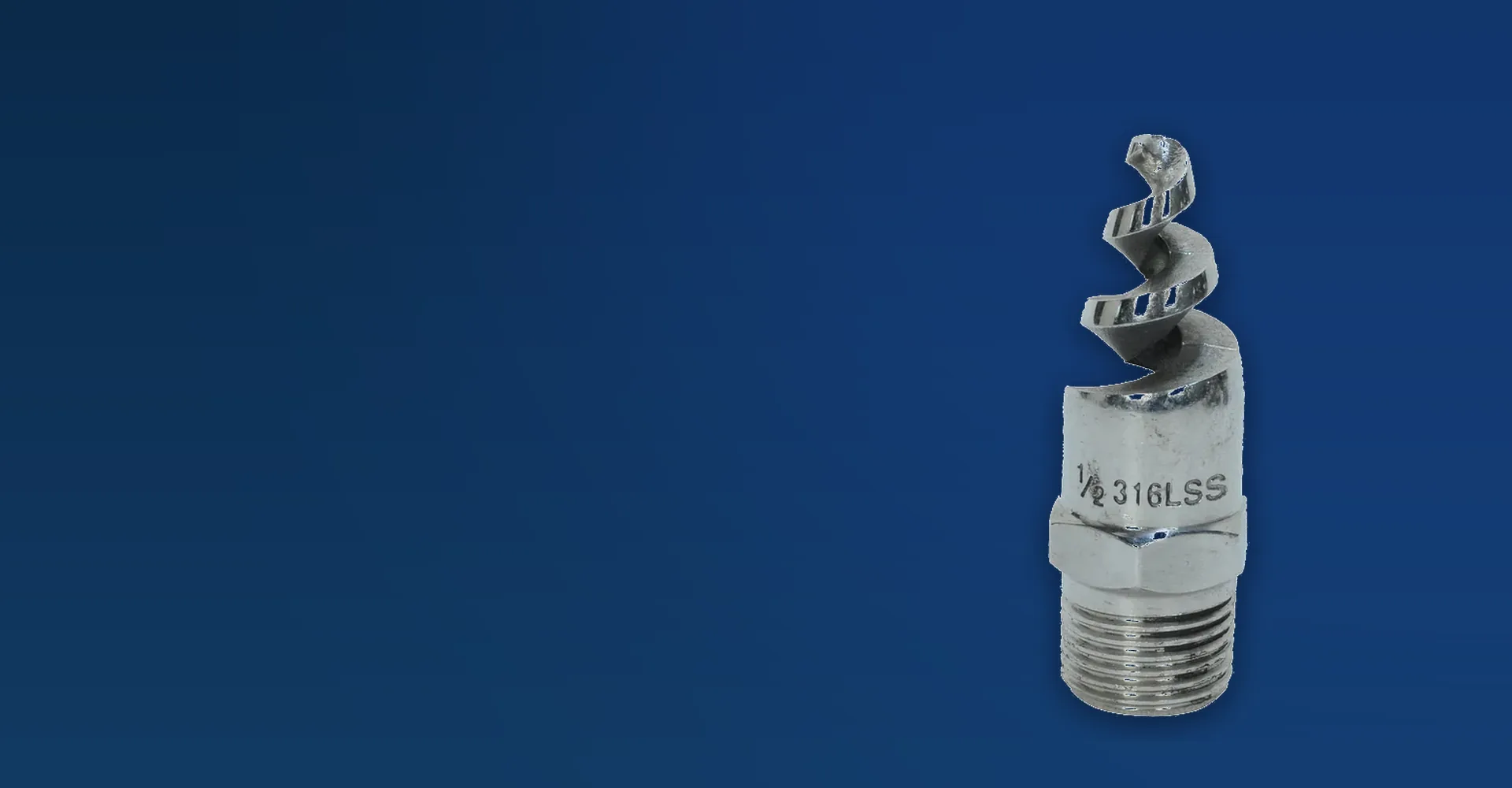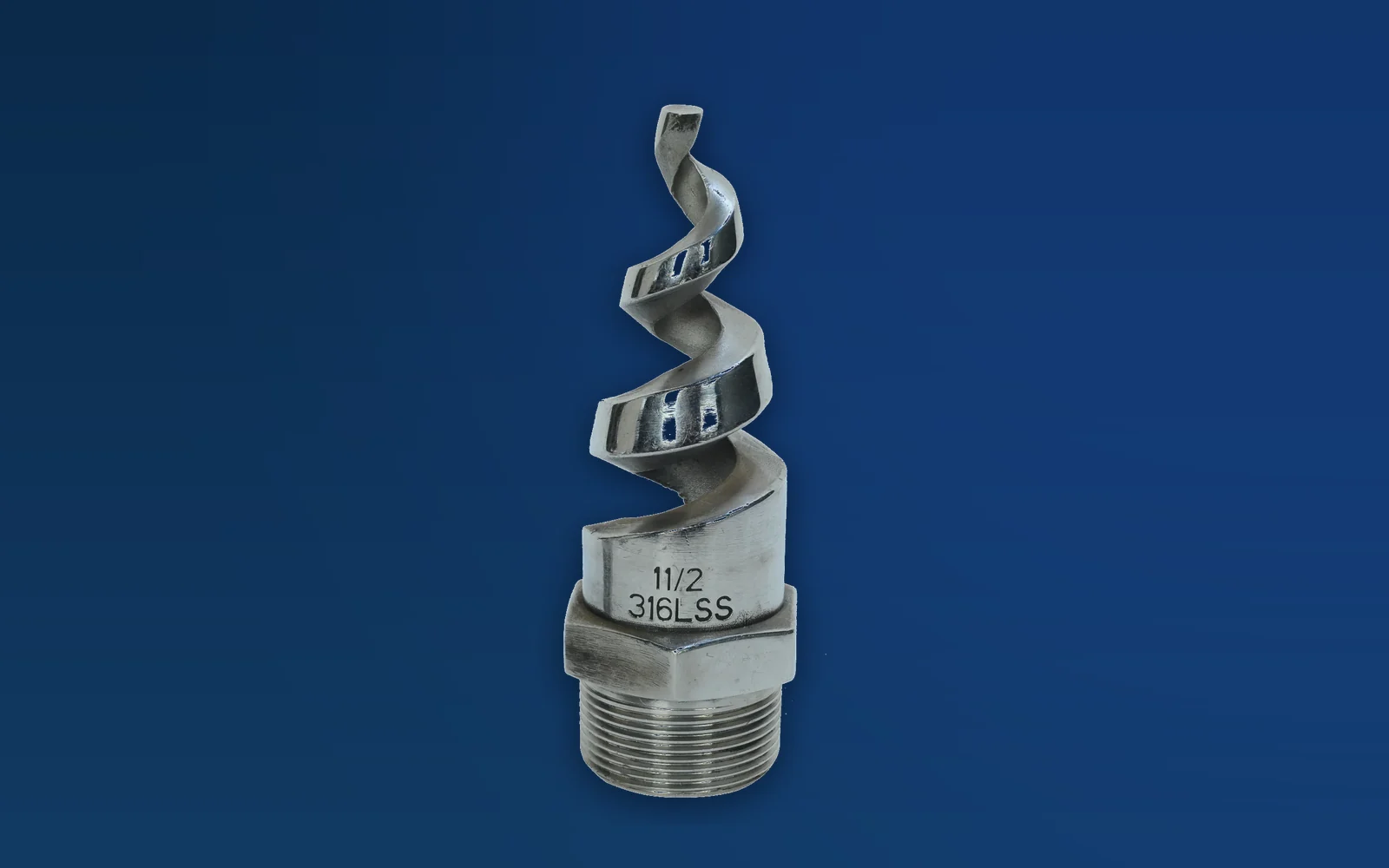
In the iron and steel industry, spray nozzles work under some of the harshest conditions in manufacturing. Cooling and quenching, descaling, dust suppression and chemical application are all carried out through nozzles exposed to high temperature, scale and abrasive water.
Cooling and quenching
In continuous casting and rolling, the cooling rate determines the metallurgical properties of the steel. Full cone and flat jet nozzles placed in a defined pattern take heat out of the strand evenly; an uneven spray leaves hot spots that cause cracking and shape defects.
Descaling
High-pressure flat jet nozzles strip the oxide layer from the hot surface before rolling. Impact force, spray angle and the distance to the surface must be matched together — too little impact leaves scale behind, too much wastes energy and cools the strand more than intended.
Dust suppression
Dust released at transfer points, crushers and stockyards is bound with a fine water mist. Air atomising nozzles produce droplets in the same size range as the dust particles, so the dust is captured with the smallest possible amount of water.
Material selection
Hardened stainless steel and tungsten carbide orifices hold their geometry under abrasive scale-laden water. Because a worn nozzle silently increases flow and ruins the spray pattern, flow measurement should be part of planned maintenance.
What we offer
We size the cooling and descaling headers for your line, supply high-pressure series in wear-resistant materials, and manufacture to your project when the standard range does not cover the duty.